
Tomasz Sleziak: 'Technological,' Post-Human and Transcendental Implications of Neo-Confucian Regimen in Joseon: A Look at Ancestral and Death Rites
Tomasz Sleziak, Independent Scholar
Moderated by Sean Han, The University of Alabama
This Zoom event will take place on October 19, 11:00 am (Los Angeles Time) / 2:00 pm (New York Time) / 7:00 pm (London Time)
Please register: https://us02web.zoom.us/meeting/register/C7p_WvweT2q5QZCQUAcDjA
Abstract
Neo-Confucian, and indeed Joseon’s officially-regulated funeral rites emphasize a twofold distinctions between the mourner and the mourned. The former ones, separated from the latter through natural existential processes, are to pursue authenticity of emotional expression regulated by the lifelong practice of morality, while the deceased experience a symbolic transformation from living members of a community to ancestors periodically and formally venerated in familial rites. This transformation could be interpreted through the lens of “traditional” hun-po dichotomies or through the varying li-qi dynamics. The end result was aimed at the promotion of virtue in the family and the associated community, and often implied generational transitions in which youth frequently became clan leaders. The entire regimen of regulations pertaining to these processes as accepted and enforced by the central government in Joseon Korea was heavily inspired by the famed “Family Rituals” of the venerated Zhu Xi, and could be interpreted as something akin to Foucault’s “technologies of self”. Elsewhere, in the modern world and in non-Sinophone religious systems, human death has been framed both as an ending in itself and as an existential change that has a bearing on the entire anthropocentric world order. Moreover, the wider field of Posthumanism reframes these topics into a subset of concepts that, for example, involve immortality, the roles or functions served by dead bodies, or the agency of ‘deceased minds’. In this talk, I will discuss key ramifications of Confucian-Posthuman methodological intersections pertaining to the topic at hand.
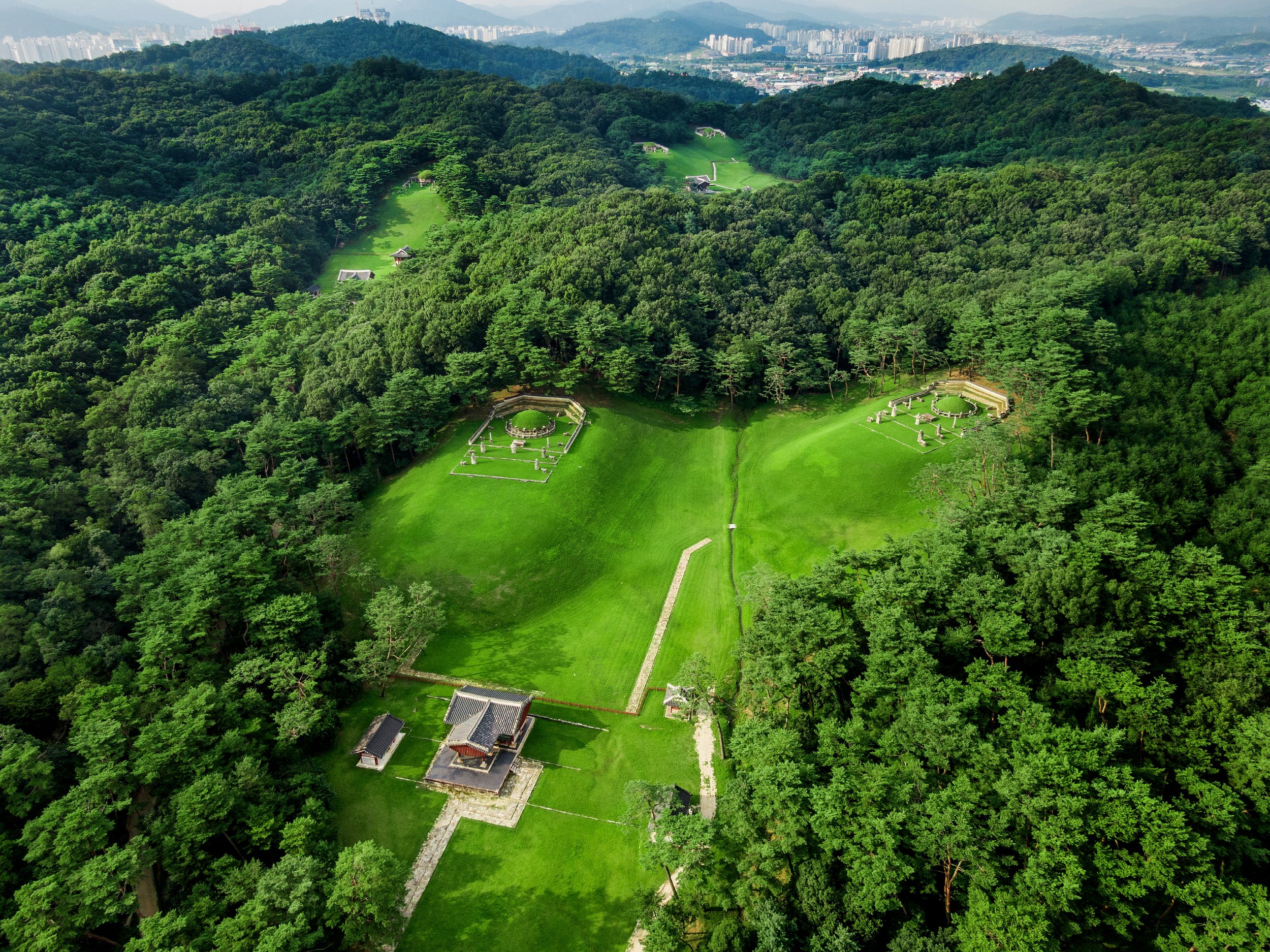
Guri Tomb Complex.
About the Speaker
Dr. Tomasz Sleziak is a scholar in Korean studies (particularly Korean but also global Confucianism) and Posthumanism, conducting research on Confucian socio-legal and metaphysical discourse throughout Korean history, as well as its placement within the global humanist discourse. He completed his PhD (dissertation: “Conceptual Framework of Late Joseon Social Mobility, Legal Systems and Confucian Heritage”) in Korean Studies at London’s SOAS after having achieved his Master’s Degree at Adam Mickiewicz University in Poznan, Poland. He has cooperated with such institutions as the Academy of Korean Studies, University of Zurich, Harvard-Yenching Institute, Ruhr-University Bochum and Oxford House Research. He has also published multiple papers as well as facilitated Korean Studies panels across multiple conventions and conferences globally. Overall, his main topical field is the influence of traditional Confucian thought on social superstructure, legal codes and humanistic as well as Posthumanist trends in Korean Peninsula and Sinophone cultural sphere.
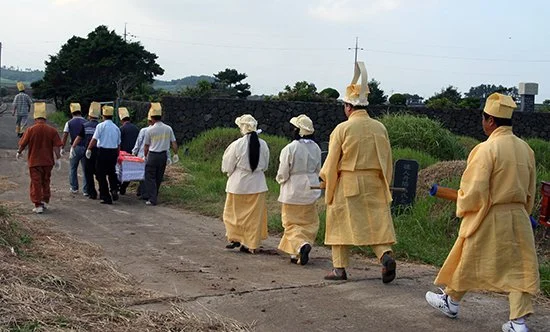
Ritual for a deceased child.
Moderator
Dr. Sean Han is an Assistant Professor of Korean History at the University of Alabama. His research focuses on the cultural and diplomatic history of Korea in the late nineteenth and early twentieth centuries, with particular attention to transnational exchanges and intellectual networks across East Asia. He is currently completing a book manuscript that examines how Korean intellectuals observed, experienced, and engaged with China from the late nineteenth century through the end of the Japanese colonial period, and how these encounters contributed to the formation of modern Korean nationhood. Dr. Han serves on the Board of Directors and as Secretary of the Chosŏn History Society.