
Choi Sung-woon - The Joseon Royal Medical System as a Frame of Reference: Reading the Jurye (周禮) and Evaluating Qing Medical Writings in King Yeongjo’s Gyeongyeon
Choi Sung-woon, Research Professor, Kyung Hee University
Moderated by Soyoung Suh, Associate Professor, Dartmouth College
This Zoom event will take place on May 7, 5:30 pm (LA Time) / 8:30 pm (New York Time) / May 8, 9:30 am (Seoul Time)
Please register: https://us02web.zoom.us/meeting/register/nuKcxeYOSxeyOjGsAGN0_w
Abstract
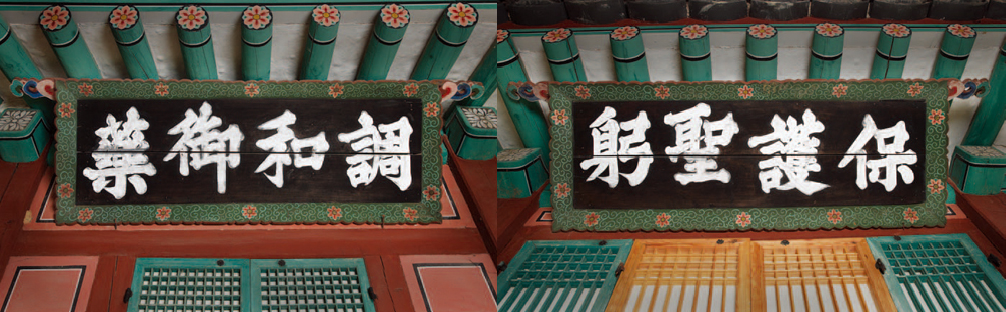
This paper examines a newly devised royal medical system in King Yeongjo’s court that shapes the interpretation of the Jurye (周禮) and the evaluation of Qing medical writings. This system is articulated around Jori-jijae (調理之劑), newly developed in the Yeongjo court, for preventive cultivation, and Daejeung-jijae (對症之劑), for post-onset treatment.
Within this framework, the section on medical roles in the Jurye is not interpreted on the basis of the text alone, but through the operation of the royal medical system. With the introduction of Jeolseon (節宣), Shik-ui (食醫) is reinterpreted from dietary practice attuned to seasonal qi to preventive cultivation associated with Jori-jijae. The meaning of the text is reconfigured in accordance with the functioning of the system and is asserted as the original meaning of the Jurye.
Qing medical writings are criticized on two grounds: individual therapeutic methods do not operate in accordance with their proper aims and modes, and the systems coordinating and deploying these methods are forced frameworks that cannot be put into practice. The Joseon court treats its royal medical system as a more complete frame of reference than the medical section of the Jurye and extends it to the assessment of Qing medical writings.
About the Presenter
Choi Sung-woon is an HK Research Professor at Kyung Hee University. His research focuses on the reconstruction of concrete medical and bodily practices and the historical conditions under which they were constituted. He works primarily on late Joseon, while extending his inquiry from the early modern period to the present.
His research has examined the microhistorical production of new pharmacological knowledge in late Joseon beyond the repetition of earlier textual traditions. He has also traced the adoption and diffusion of Bokshik (服食), a Daoist longevity practice, through the diary of a Neo-Confucian scholar, situating these practices within broader intellectual and social contexts. In addition, he has analyzed how Yi Je-ma’s conception of the body was formed through the Confucian reconfiguration of archery and inner alchemy.
He has also examined the emergence and diffusion of charyeok (借力) practices in the mid-to-late nineteenth century, analyzing how practices that pursued extraordinary physical and spiritual capacities through spirit possession and the use of medicinal substances intersected with broader social and political movements, including groups advocating dynastic change and the Donghak Peasant Movement.
His recent work examines the formation of the Joseon royal medical system under King Yeongjo, with particular attention to the emergence of Jori-jije (調理之劑) as a preventive regimen for bodily cultivation. Through this case, he analyzes how medical practices, classical discourses, and normative constraints were configured, as well as the tensions between Confucian ideals and embodied aspirations toward health, longevity, and vitality.
About the Moderator
Soyoung Suh is an Associate Professor of History at Dartmouth College. Her first book, Naming the Local: Medicine, Language, and Identity in Korea since the Fifteenth Century (Harvard University Asia Center, 2017), examines how medical knowledge in Korea has been shaped by evolving concepts of locality, with particular attention to the geo-cultural specificities of herbs, soil, and human constitutions. Her scholarly articles have appeared in Culture, Medicine, and Psychiatry, Asian Medicine: Tradition and Modernity, Asia Pacific Perspectives, Korean Journal of Medical History, Journal of Korean History of Science Society, and the Journal of Korean Academic Society of Nursing Education. She is also a co-researcher on a comparative history of illnesses project at Ewha Women’s University (2020–2026). Her current research, tentatively titled Sudden Transition and Enduring Past: Breast Cancer in Korea, 1800–2010, explores the diagnosis, treatment, and gendered experiences of cancer in modern Korea.