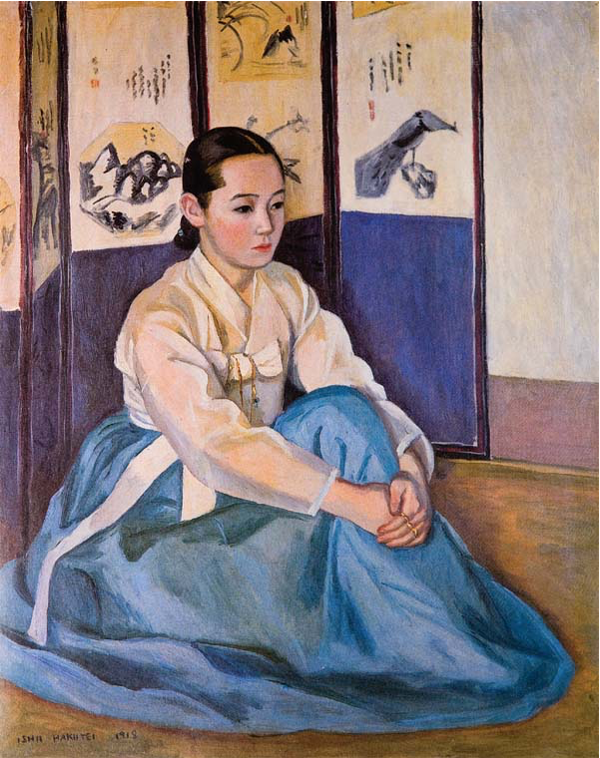
Rethinking Minhwa: Colonial Visuality and the Afterlives of Late Chosŏn Screens
Presented by Irene Choi, Visiting Scholar, Seoul National University.
This Zoom event will take place on Jan 14, 04:30 - 6:00pm (LA Time) / 07:30 - 09:00pm (New York Time) / Jan 15, 09:30 - 11:00am (Seoul Time).
Please register: https://us02web.zoom.us/meeting/register/m6DuF51eSASzERJjugRxqA
Abstract
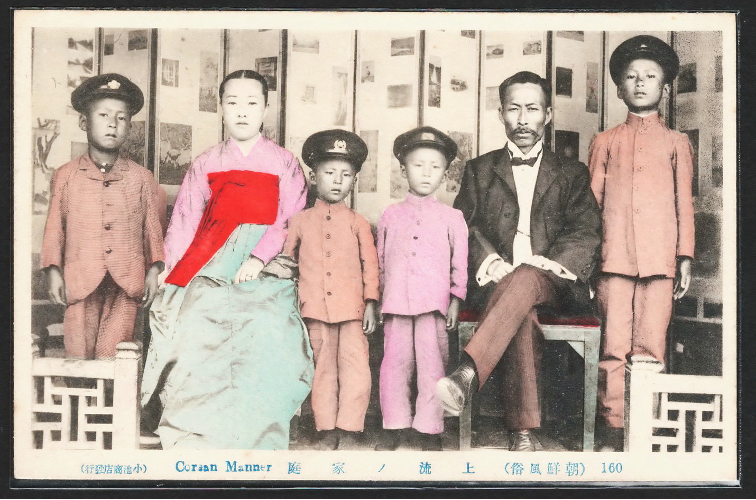
This talk reframes paengnapto 百衲圖 (pictures of a hundred patched pieces) screens as a critical site for rethinking the modern category of minhwa 民畫 ("folk painting") and the visual regimes that produced it under Japanese colonial rule. Emerging in the late Chosŏn period, paengnapto folding screens were composed of numerous small paintings and calligraphic excerpts—either pasted onto the surface or meticulously simulated—arranged into composite pictorial fields. These screens cultivated a mode of viewing and consuming art and calligraphy grounded in compilation, erudition, and textual and visual literacy, linking the court, professional painters, and urban markets through practices of collecting, connoisseurship, and mounting. While examining both extant paengnapto screens and their representations in the early twentieth century within the colonial context, this talk interrogates the category of minhwa, since many later examples of paengnapto, often anonymous works produced during this period, came to be classified as minhwa in Korean art history and museum collections. Entering a new visual regime shaped by colonial systems of display, ethnography, and art-historical writing, Korean screens, including paengnapto, were reframed within discourses that defined minhwa as an aesthetic of anonymity and local color (hyangt’osaek 鄕土色), positioning it as both ethnographic evidence and a marker of “Korean” cultural essence. By examining twentieth-century representations of paengnapto, this talk analyzes the constructedness of minhwa as a colonial taxonomy and explores how paengnapto screens, through their materiality and fluid acts of citation and recombination, destabilize that system and reveal the fissures that continue to underlie the historiography of Korean art.
About the Speaker
Irene Choi is an art historian specializing in Korean and East Asian art, with research interests in materiality, visual circulation, and cross-cultural exchange in East Asian art. She received her BA (Honours), MA, and PhD in Art History from the University of British Columbia, where her graduate research was supported by the Social Sciences and Humanities Research Council of Canada (SSHRC). She previously held a Junior Fellowship at the Kyujanggak Institute for Korean Studies, Seoul National University, and is currently a Visiting Scholar (December 2025–26) at the Seoul National University Asia Center. Her research focuses on the visual and material culture of late Chosŏn and modern Korea, examining the intersections of collecting, materiality, and the historiography of Korean art history. Her work on late Chosŏn Ch’aekkŏri appeared in Journal18: A Journal of Eighteenth-Century Art and Culture (2020), and her broader interests include transmediality and the formation of art-historical knowledge in East Asia.
Moderator
James Flowers is a Brain Pool Program Research Fellow at the Climate-Body Institute in Kyung Hee University, and program advisor of the Choson History Society. He is a historian of medicine, focusing on traditional medicine in Korea. His current book project focuses on the range of traditional Eastern-medicine healers in Korea 1910-1945. He received his PhD from the Department of the History of Medicine, the Johns Hopkins School of Medicine.